
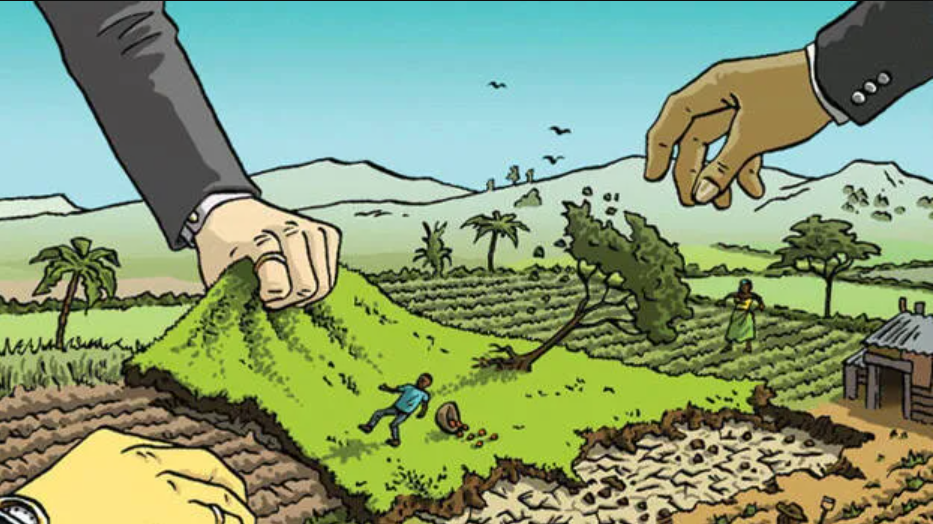
Imagine spending your life savings on a piece of land in Kenya. You hired a lawyer, conducted a search at the Ministry of Lands, paid stamp duty, and transferred the title into your name. Then, years later, someone knocks on your gate and tells you the land is theirs. And a court agrees.
This is not a hypothetical. Title deed fraud in Kenya is one of the most devastating financial crimes ordinary citizens face, and even doing everything by the book is no longer a guarantee of safety. Apart from highlighting costly mistakes to avoid when buying land, this article unpacks why the system is broken, what landmark cases reveal, and what you can realistically do to protect yourself.
Table of Contents
The Scale of Title Deed Fraud in Kenya
The problem is far larger than most buyers realise. Over 10,000 land fraud cases were under investigation by the Ministry of Lands in 2024 alone, with losses running into billions of shillings. More than 3,000 new cases are reported every year nationwide. Kenya’s inclusion on the global grey list for money laundering has been partly linked to criminal activity in the real estate sector.
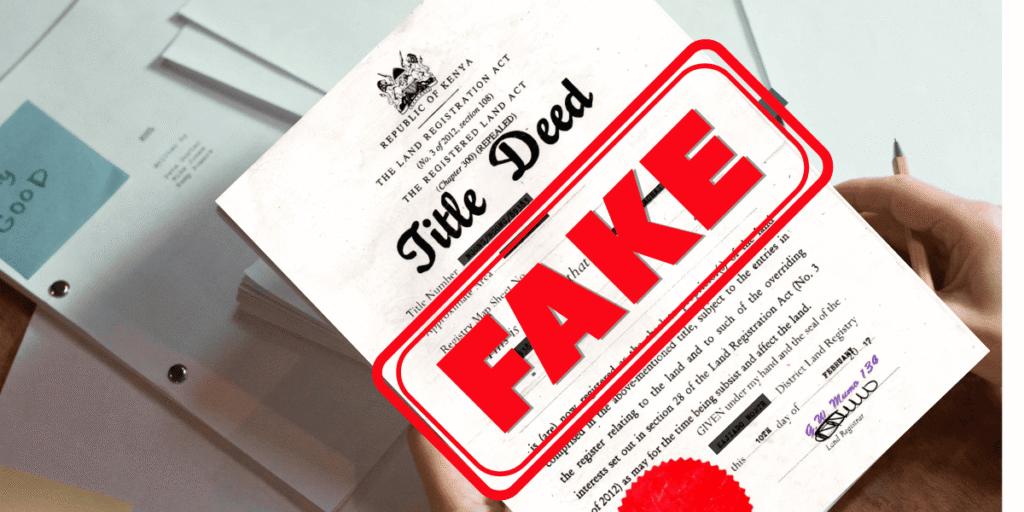
Fraud takes many forms. Some are simple: a fraudster poses as a landowner using forged identification and sells land they do not own. Others are deeply systemic: corrupt officials inside land registries manipulate records, issue duplicate titles, or “lose” files for a fee.

The Mwangi-Magugu Case: When the System Fails the Diligent Buyer
Perhaps no case illustrates the problem more starkly than the 2025 High Court ruling involving Equity Bank CEO James Mwangi, who was stripped of land ownership in favour of the Magugu family. The court found that Mwangi’s title had been tainted, despite him acquiring it through what appeared to be legitimate channels.
The Magugu family had maintained an unbroken chain of ownership stretching back to the early 1900s. Yet a fraudulent transfer had been registered against their title without their knowledge. Under Section 26(1)(a) and (b) of Kenya’s Land Registration Act, a title can be challenged if acquired through fraud, misrepresentation, or illegal means.
In Kenya, you can conduct a proper land search, obtain official documents, and still lose your property to someone who appears later with a stronger claim. That is the painful reality buyers must understand.
Why the Registry Is the Weakest Link
Kenya’s land registry has long been accused of being a playground for corrupt officials and unscrupulous brokers. Files disappear. Duplicate titles mysteriously appear. Fraudulent entries are sneaked into official records. And because the Torrens system of land registration protects whoever is registered as the owner, the person who registers first often wins, regardless of how they got there.
The court has repeatedly insisted that buyers exercise ‘due diligence’, but critics argue this places an impossible burden on ordinary citizens. How can a buyer detect fraud that originates from within the very institution meant to safeguard ownership?
The Most Common Types of Title Deed Fraud in Kenya
- Impersonation: Fraudsters pose as legitimate landowners using fake IDs, forged signatures, or by pretending to be heirs or family members.
- Fake title deeds: Forged or illegally obtained titles, sometimes complete with authentic-looking stamps, seals, and registry entries.
- Double selling: The same parcel sold to multiple buyers simultaneously. By the time the truth emerges, money has vanished.
- Survey mark manipulation: Physical beacons or cadastral maps tampered with to alter the apparent size or location of a plot.
- Illegal subdivision: Land sold as an individual plot that was never legally subdivided from a larger parcel.
- Ghost plots: Entirely fictional properties backed by forged GPS data, fake photos, or staged site visits.
What Actually Works: Protecting Yourself from Land Fraud
1. Use Ardhisasa for Digital Verification
The government’s Ardhisasa platform allows buyers to conduct an online title deed search for KSh 500. In counties where it is fully deployed, such as Nairobi and Mombasa, this provides instant ownership details. Note that many rural counties still rely on manual registries.
2. Conduct a Manual Registry Search
Submit Form RL26 at the relevant county land registry with a copy of the title deed. This manual process takes one to three days but reveals encumbrances, mortgages, court cases, and competing claims that digital systems may not yet reflect.
3. Check the Green Card
Ask your lawyer to obtain a certified copy of the green card from the land registry. This is the master document that tells the full ownership story, including all historical transactions.
4. Never Skip Spousal Consent
Under Kenyan law, matrimonial property requires the written consent of a spouse before it can be sold. Missing this step is a common entry point for fraud in succession disputes.
5. Use an Escrow Account
Never pay directly to a seller or agent. Instruct your lawyer to hold all funds in a client escrow account, releasing them only once transfer is fully confirmed and registered.
6. Place a Caveat on Your Title
Once you own land, lodge a caveat (Form RL 22) with the registry to prevent unauthorised transactions against your title. This is especially important for vacant land you are not actively developing.
What Reformers Are Calling For
Legal experts and land rights advocates are calling on Parliament to amend the Land Registration Act to impose personal liability on land registrars who facilitate or negligently allow fraudulent transactions. Some propose a government compensation fund, similar to models in Australia, to reimburse innocent purchasers who lose property through proven registry fraud.
Until such reforms are in place, the burden remains on buyers to be extraordinarily cautious.
Conclusion
Title deed fraud in Kenya is not just a risk for careless buyers. It threatens even the most diligent investors. Understanding the systemic weaknesses, knowing the tools available, and working with trusted legal professionals are your best defences. Legitimate sellers welcome verification. Fraudsters resist it. Let that be your first red flag.
Key Takeaway: Always verify through Ardhisasa or the land registry, obtain the green card, use escrow, and place a caveat on your property once you own it. No shortcut is worth your life savings.