
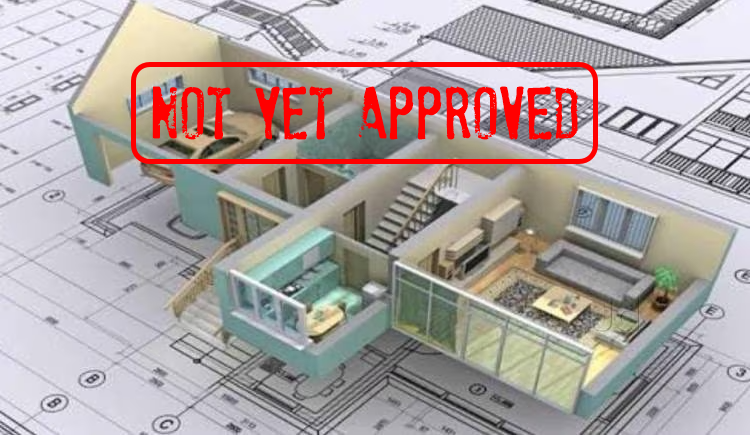
You have bought your land, finalised your house designs, and hired a contractor who is ready to mobilise. Then you spend the next three and a half months in a bureaucratic maze, collecting stamps from offices that seem designed to obstruct rather than facilitate. This is the Kenya building permit reality for thousands of homeowners every year.

The average approval time in Nairobi is 14 weeks, with delays frequently attributed to corruption and system inefficiencies. For small and medium developers, these delays translate directly into cost overruns as contractor mobilization fees accumulate, material prices shift, and loan interest continues to run.
Table of Contents
What Approvals Do You Actually Need?
1. Architectural and Structural Plans Approval
Your architect must prepare and submit full architectural drawings to the county government for approval. These drawings must comply with the Physical Planning Act, local zoning rules, setback requirements, and allowable plot coverage ratios. In Nairobi, this goes through the Nairobi City County.
2. National Construction Authority (NCA) Registration and Levy
Any building project in Kenya must be registered with the NCA. Contractors must also be registered with the NCA. You will pay a levy based on the contract value of the project. Failure to register can result in work stoppages and fines.
3. National Environment Management Authority (NEMA)
For projects above a certain threshold, typically larger residential developments or any project near wetlands, forests, or sensitive ecosystems, an Environmental Impact Assessment (EIA) is required. This adds weeks to the approval timeline and must be completed before construction begins.
4. Water and Sewerage Approvals
You must obtain approval from the relevant county water utility for connection to water mains and the sewerage system. In Nairobi, this involves Nairobi City Water and Sewerage Company (NCWSC). In other counties, similar bodies apply.
5. Power Connection
Kenya Power is usually contacted separately for electricity connection. For new estates and residential areas, this can involve significant infrastructure charges, particularly if the development is far from the nearest transformer.
Why Delays Happen: The Real Causes
Official delays have multiple causes, some systemic and some deliberate. Common legitimate causes include understaffed county planning departments that process hundreds of applications simultaneously, incomplete submissions from applicants or their architects, and changes in zoning or planning guidelines that trigger review of submitted plans.
Deliberate causes are harder to discuss openly but are widely acknowledged by professionals. Some officials exploit the process to extract informal payments. Files are “lost” and then found after a fee. Approvals are technically correct but inexplicably slow without facilitation.
The digital NCA portal has improved transparency for some aspects of the process, but the integration between county planning systems, NEMA, and utility providers remains fragmented.
A Step-by-Step Guide to Navigating the Process Faster
- Hire an architect registered with the Architectural Association of Kenya (AAK). Unregistered architects often produce incomplete drawings that trigger rejection and resubmission cycles.
- Conduct a pre-application meeting with county planning officials before submitting. This is not a formality; it can reveal zoning issues or local requirements that are not publicly documented.
- Submit complete documentation the first time. Incomplete submissions are one of the biggest causes of delay. Your architect should provide a submission checklist aligned to county requirements.
- Apply for NCA registration and NEMA assessment in parallel, not sequentially. These processes can run simultaneously.
- Follow up in writing. Phone calls are easily ignored. Email submissions and follow-ups create a paper trail that is harder to dismiss.
- Use the NCA’s online portal for project registration and status tracking. This removes the need for in-person visits for some steps.
- Engage a professional project manager if your build is above KES 10 million. A PM with county relationships can navigate the process significantly faster.
What the Law Says About Approval Timelines
The Physical Planning Act and county regulations set out timelines within which applications should be processed. Nairobi City County is required to provide a decision within 90 days of a complete application. If you have submitted a complete application and received no decision, you have legal grounds to demand one. Your lawyer can issue a formal demand, and persistent delay without cause can be challenged in the Environment and Land Court.
The Cost of Delays
A 14-week delay is not just an inconvenience. If your contractor has mobilized, you may be paying supervision fees, site security, and preliminary costs during the wait, which can add up unplanned costs for your project. If you are financing the build with a mortgage or construction loan, interest is running. Material prices may rise between approval and commencement. Estimating the full cost of an approval delay is a key part of project financial planning that most first-time builders overlook entirely.
Conclusion
The Kenya building permit process is one of the most significant obstacles between a homebuilder’s vision and the actual pouring of foundations. Understanding every approval required, submitting complete documentation, and working with registered professionals are the most effective ways to reduce delay. The system is imperfect, but it is navigable with the right preparation.

Key Takeaway: A complete application submitted by a registered architect, with NCA and NEMA processes running in parallel, is your best approach for cutting through a lengthy approval bottleneck.





Pingback: NEMA Approval for Home Construction in Kenya: Do You Actually Need It? - JenziBora