
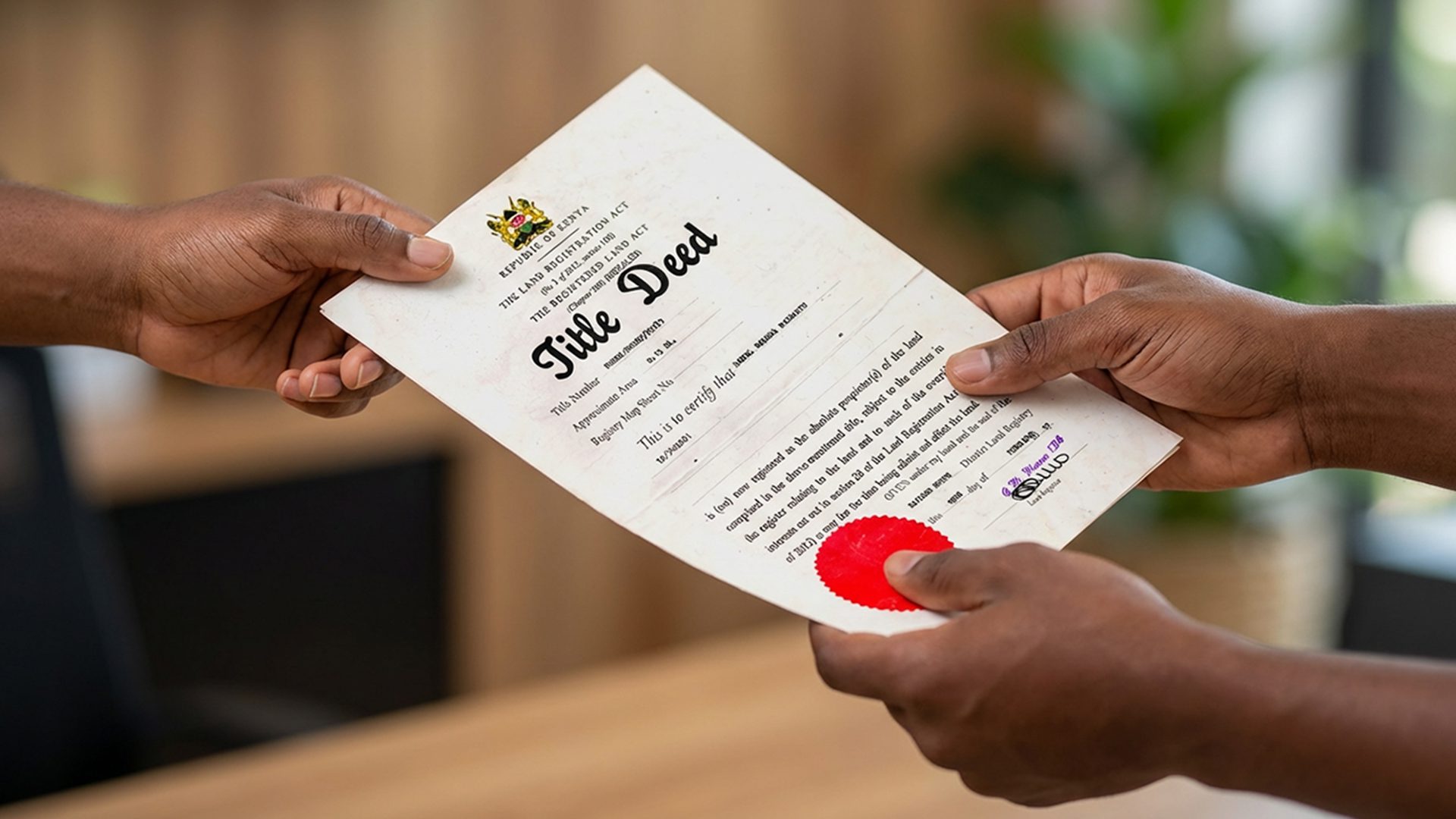
Whether you are buying property for the first time or selling land you have owned for years, understanding how to transfer a title in Kenya is essential. The process can seem complex, but with the right information and preparation, you can navigate it smoothly, legally, and with minimal delays.
This comprehensive guide walks you through every step of the land title transfer process in Kenya from the documents you need to the government offices you will visit so you know exactly what to expect.
Table of Contents
What Is a Land Title Transfer in Kenya?
A land title transfer in Kenya is the legal process of changing the registered ownership of a piece of land or property from one person (the seller/transferor) to another (the buyer/transferee). This process is governed by the Land Registration Act, 2012, and the Land Act, 2012, and is managed by the Ministry of Lands and Physical Planning.
Once the transfer is complete, the new owner’s name appears on the title deed, which is the official document proving ownership of land in Kenya.
Why Is Transferring a Land Title Important?
Many Kenyans make the mistake of occupying or using land without completing the title transfer. This creates serious legal risks. Here is why you must complete the process:
- Legal protection: Only a registered owner has full legal rights over the land.
- Avoid disputes: Proper registration prevents future ownership conflicts.
- Access to credit: Banks and financial institutions require a clear title for mortgages and loans.
- Government compliance: Failure to transfer a title can result in penalties or complications during future transactions.
- Estate planning: A properly transferred title makes inheritance and succession straightforward.
Documents Required to Transfer a Title in Kenya
Before you begin the process of how to transfer a title in Kenya, gather all the necessary documents. Missing even one can delay the entire process significantly.
Documents from the Seller (Transferor)
- Original title deed
- National Identity Card or Passport (copy)
- KRA PIN Certificate
- Passport-size photographs
- Land Rent Clearance Certificate (from the National Land Commission)
- Land Rates Clearance Certificate (from the respective County Government)
- Consent to transfer (from the National Land Commission for government leasehold land)
- Spousal consent (if the land is matrimonial property)
Documents from the Buyer (Transferee)
- National Identity Card or Passport (copy)
- KRA PIN Certificate
- Passport-size photographs
- Company documents (if buying as a company — Certificate of Incorporation, CR12, Board Resolution)
Additional Documents
- Sale Agreement signed by both parties
- Valuation report (for stamp duty purposes)
- Completed transfer forms (RL1 or LR Form 16)
- Search results from the land registry
| Pro Tip: Always conduct an official land search at the relevant Lands Registry before buying. This confirms the seller is the genuine registered owner and reveals any existing caveats, charges, or encumbrances on the property. |
Step-by-Step Process: How to Transfer a Title in Kenya
Here is a detailed breakdown of how to transfer a title in Kenya, step by step.
Step 1: Conduct a Land Search
Before any money changes hands, visit the relevant Lands Registry or use the Ardhisasa online platform to conduct an official search. The search costs approximately KES 500 and returns a report showing the current registered owner, the size of the land, and any existing encumbrances such as charges or cautions.
If the property is in Nairobi, you must use the Ardhisasa platform, which has digitised land records for the city. Other counties are gradually being onboarded onto the system.
Step 2: Obtain a Valuation Report
A government-approved valuer or a registered private valuer must assess the property to determine its market value. This valuation is used to calculate the stamp duty payable. The Kenya Revenue Authority (KRA) uses the higher of the sale price or the valuation to compute stamp duty.
Step 3: Obtain Clearance Certificates
You need two clearance certificates:
- Land Rent Clearance Certificate: Obtained from the National Land Commission (NLC) to confirm all land rent has been paid. This applies to leasehold properties.
- Land Rates Clearance Certificate: Obtained from the County Government to confirm all property rates are paid up to date.
Both certificates confirm there are no outstanding government dues on the property.
Step 4: Obtain Consent to Transfer (If Required)
For properties held under government leasehold (most urban land), the seller must obtain consent to transfer from the National Land Commission. You apply at the NLC offices or online, submitting the required documents and paying the applicable consent fee. Processing typically takes 14–30 days.
Agricultural land may also require consent from the Land Control Board (LCB). The LCB convenes monthly in each sub-county and must approve the transaction. Failure to obtain LCB consent makes the transaction void.
Step 5: Prepare the Transfer Documents
Your lawyer (advocate) will prepare the official transfer instrument. For freehold land, the standard form is RL1. For leasehold land, it is LR Form 16. Both parties — buyer and seller — must sign the transfer instrument before a witness.
The sale agreement, transfer forms, and supporting documents are then compiled into a conveyancing file.
Step 6: Pay Stamp Duty
Stamp duty is a government tax paid by the buyer before registration. The rates are:
- 4% of the property value for properties in municipalities and urban areas
- 2% of the property value for properties in rural areas
Payment is made through KRA via the iTax portal (itax.kra.go.ke). You generate a payment slip on iTax under the Stamp Duty section, pay via M-Pesa, bank, or KRA-approved payment channels, then obtain the stamp duty payment confirmation.
| Important: The KRA assesses stamp duty based on the higher of the agreed sale price or the government valuation. Undervaluing property to reduce stamp duty is illegal and can attract penalties. |
Step 7: Lodge Documents at the Lands Registry
Once stamp duty is paid, your advocate lodges all the documents at the relevant Lands Registry for registration. The documents submitted include:
- Original title deed
- Completed and signed transfer instrument
- Stamp duty payment confirmation
- Land rent and rates clearance certificates
- NLC consent (if applicable)
- Copies of ID and KRA PIN for both parties
- Valuation report
The registry officer examines the documents, and if everything is in order, the title deed is registered in the buyer’s name.
Step 8: Collect the New Title Deed
After registration is complete, you return to the Lands Registry to collect the new title deed now registered in your name. Keep this document in a safe place — it is your primary proof of ownership.
You should also conduct a post-registration search to confirm the title now reflects your name as the registered owner.
Costs Involved When Transferring a Land Title in Kenya
Understanding the costs is a key part of knowing how to transfer a title in Kenya. Below is a summary of typical fees involved:
| Fee / Cost | Approximate Amount |
| Stamp Duty (urban land) | 4% of property value |
| Stamp Duty (rural land) | 2% of property value |
| Land Rent Clearance Certificate | Varies by county |
| Land Rates Clearance Certificate | Varies by county |
| Registration fees | Approx. KES 5,000–10,000 |
| Consent fees (if applicable) | Varies |
| Legal/conveyancing fees | 1–2% of purchase price |
Note: Costs vary depending on the property value, location, and whether complications arise during the process. Always budget a buffer above your estimates.
How Long Does It Take to Transfer a Title in Kenya?
The timeline for a land title transfer in Kenya varies depending on the efficiency of the registry, whether all documents are in order, and whether consent is required. Below is a general estimate:
- Land Search: 1–3 days
- Valuation: 3–7 days
- Land Rent & Rates Clearance: 7–14 days
- NLC Consent: 14–30 days
- Stamp Duty Assessment and Payment: 2–5 days
- Registration at Lands Registry: 14–30 days
In total, expect the process to take between 30 and 90 days when everything runs smoothly. Complications such as missing documents, disputes, or system downtime can extend this timeline.
Using Ardhisasa for Land Title Transfers in Nairobi
The Kenyan government launched the Ardhisasa platform to digitise land records and streamline transactions. If your property is in Nairobi County, all land services — including searches, valuations, consent applications, and title transfers — must be done through Ardhisasa at ardhisasa.go.ke.
The system has significantly reduced fraud, improved transparency, and reduced physical visits to land offices. Both parties create accounts, and the transaction is processed digitally. Other counties are progressively being migrated to the platform.
Common Mistakes to Avoid When Transferring a Title in Kenya
- Skipping the official search: Always search before buying — never rely on documents handed to you by the seller alone.
- Paying cash without an agreement: Always have a signed sale agreement before making any payment.
- Ignoring Land Control Board consent: For agricultural land, failure to get LCB consent voids the entire transaction.
- Undervaluing the property: Declaring a lower purchase price to pay less stamp duty is illegal and can result in penalties.
- Not using a qualified advocate: While you can technically transfer a title without a lawyer, the risks are extremely high. Always use a registered conveyancing advocate.
- Losing the title deed: Keep the original title deed in a secure location. If lost, replacement is a lengthy process.
Special Circumstances in Land Title Transfers
Transferring Inherited Land
If you inherited land, you must first complete the succession process through the court or out-of-court succession before transferring the title. The executor or administrator of the estate handles the transfer, and the title is first vested in the estate before being transferred to the heirs.
Transferring Company-Owned Land
If the seller is a company, additional documentation is required, including a Certificate of Incorporation, the company’s CR12 (showing current directors), a Board Resolution authorising the sale, and signatures from authorised signatories.
Transferring Land as a Gift
Land transferred as a gift still requires a formal transfer process and payment of stamp duty. The stamp duty is calculated on the market value even though no money changes hands.
Tips for a Smooth Land Title Transfer Process in Kenya
- Hire a qualified conveyancing advocate from the Law Society of Kenya.
- Begin collecting clearance certificates early, as they take the most time.
- Use the Ardhisasa platform for Nairobi properties to reduce physical office visits.
- Keep certified copies of all documents submitted to the registry.
- Follow up regularly at the Lands Registry — the squeaky wheel gets the grease.
- Ensure your KRA PIN is active and correctly linked to your ID number.
- Budget for incidental costs such as transport, printing, and certification fees.
Conclusion
Knowing how to transfer a title in Kenya is one of the most important skills for anyone dealing in property. The process involves multiple government agencies, legal documents, and fees — but with proper preparation and the right professional support, it is entirely manageable.
The key steps are: conduct a land search, obtain a valuation, get clearance certificates, secure any required consents, pay stamp duty, and lodge documents at the Lands Registry. Once complete, you will hold a title deed in your name — the most secure proof of land ownership in Kenya.
Whether you are buying your first plot, receiving inherited land, or acquiring commercial property, following this guide ensures you complete the process correctly, legally, and with confidence.